A short answer
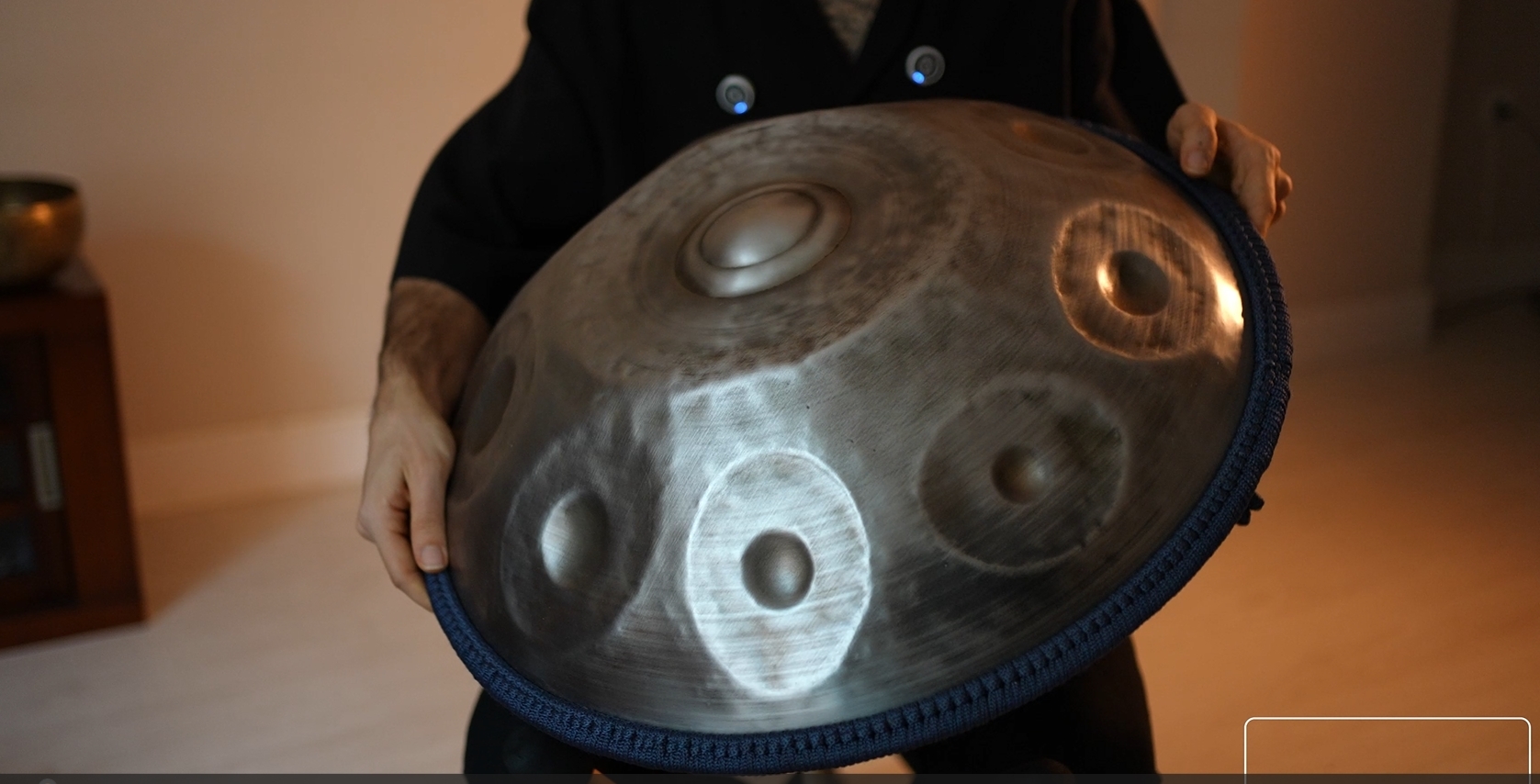
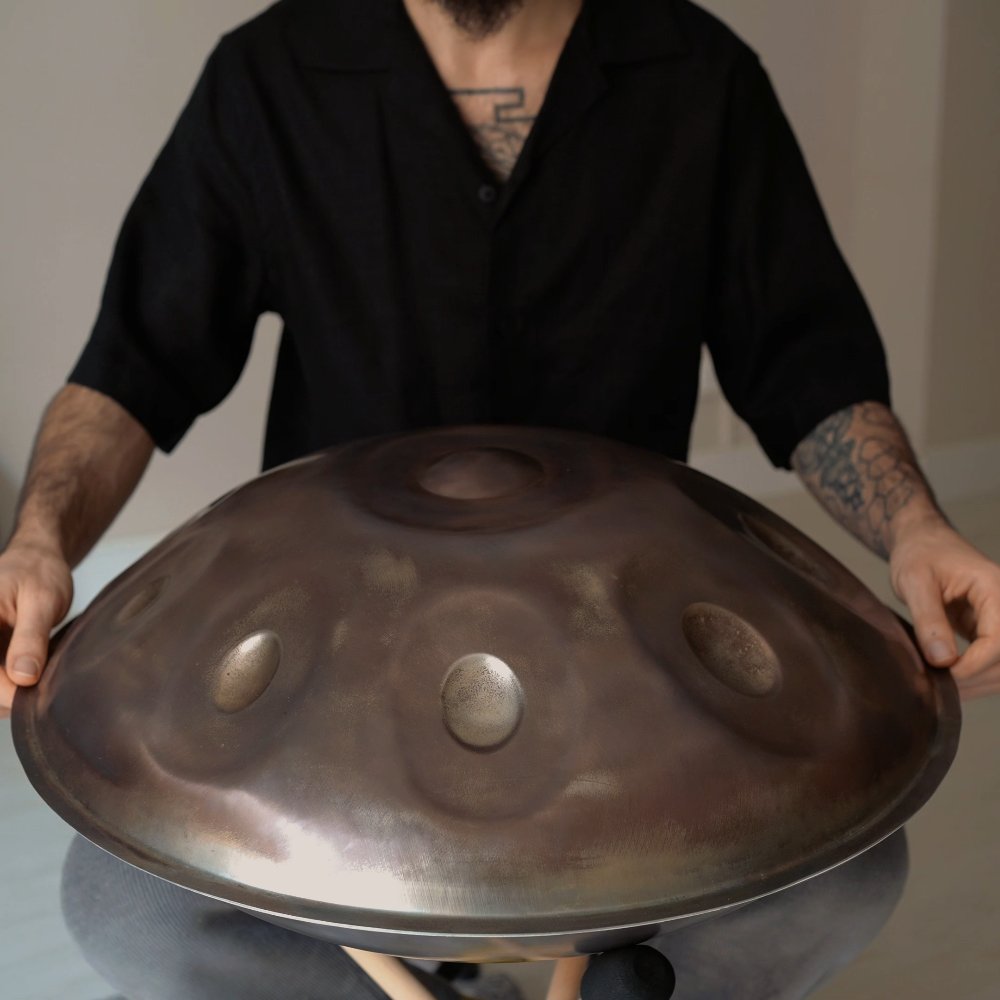
A handpan is a steel instrument shaped like a flying saucer and played with the hands. Its top has a central note and a ring of tuned notes around it. Every handpan is tuned to one scale, so whatever you play sounds harmonious.
Where it comes from
The handpan grew out of the Hang, an instrument created in 2000 in Bern, Switzerland. Today many makers around the world build handpans in their own style, and the word handpan is used for the whole family.
How it is built
- Two steel shells joined together, forming a resonating body.
- The ding: the dome in the centre of the top, usually the lowest note.
- Tone fields: the notes around the ding, each hammered and tuned by hand.
- The gu: the opening on the bottom that lets the body resonate.
What 9+1 or 12+3 means
The layout tells you how many notes the instrument has. 9+1 usually means nine notes plus the central ding. 12+3 adds extra bass notes, giving a wider range. More notes are not automatically better: a 9+1 is complete for meditation and first steps.
How it works
When you tap a note, it rings with its main pitch plus tuned overtones. That rich, long sound is what makes a handpan feel calming. A light touch with the fingertips is enough; it does not need force.
Next steps
Read about handpan scales, check how much a handpan costs, or listen to our handpans with real recordings.